
For the longest time Grounding Electrode Conductors (GEC) were made of bare copper. This is, of course, acceptable per NEC. The 2023 Version provides several options:
250.62 Grounding Electrode Conductor Material
The grounding electrode conductor shall be of copper, aluminum, copper-clad aluminum, or the items as permitted in 250.68(C). The material selected shall be resistant to any corrosive condition existing at the installation or shall be protected against corrosion. Conductors of the wire type shall be solid or stranded, insulated, covered, or bare.
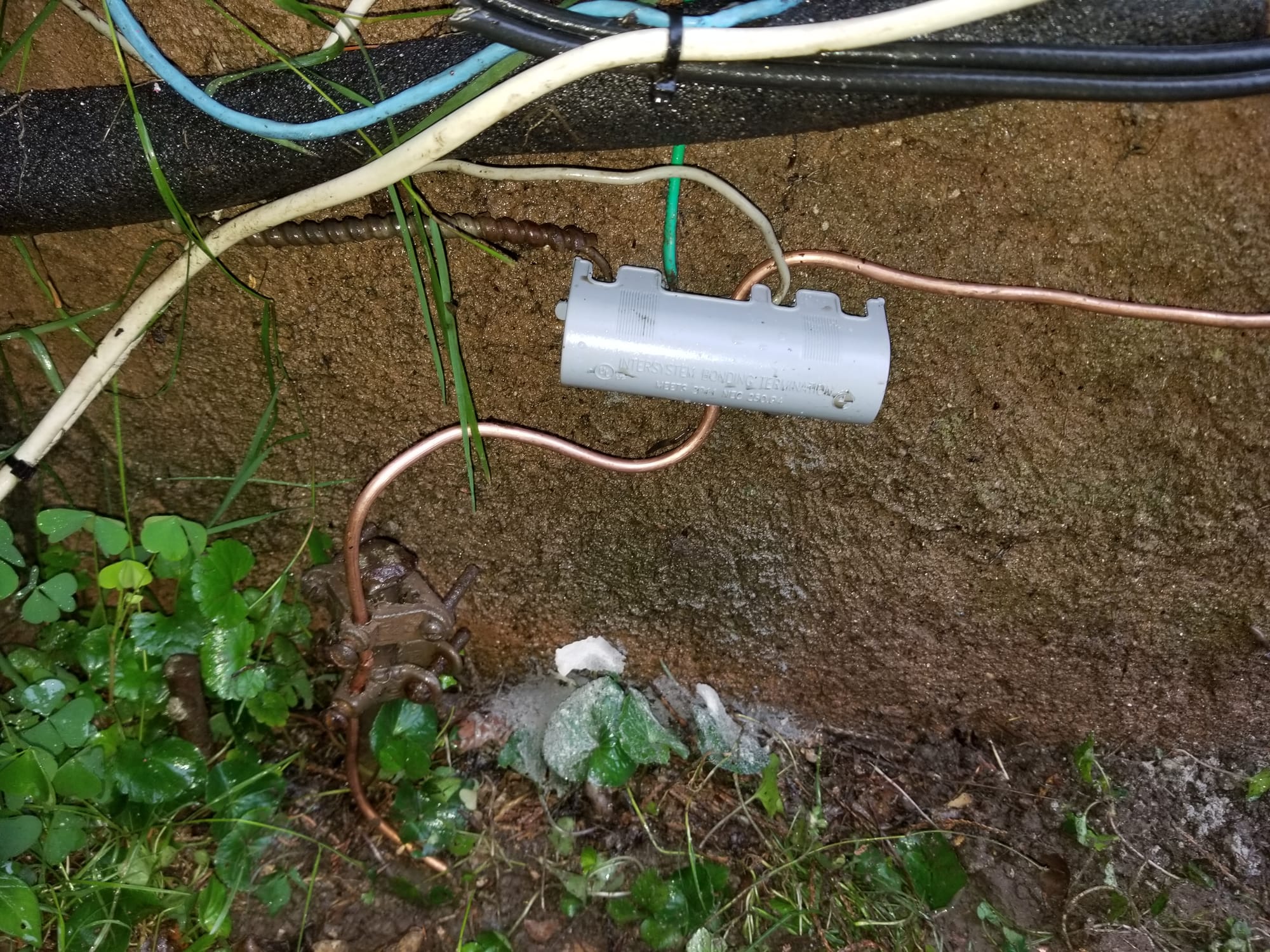
Notice that no color is specified. Grounding Electrode Conductors, if insulated, can be any color, including black, white, red and orange. The common belief that it is required to be green is simply not true. See below for a GEC passing through an Intersystem Bonding Termination Device, as well as a multitude of Bonding Jumpers with an outer armor and others with different colors of insulation:
While we are here, it has to be pointed out every time that Grounding Electrode Conductors, when originating from only Ground Rods, are under no circumstance required to be larger than 6 AWG, despite some Installers, and even Inspectors, announcing new requirements for 4 AWG copper based on service Ampacity:
(A) Connections to a Rod, Pipe, or Plate Electrode(s)
If the grounding electrode conductor or bonding jumper connected to a single or multiple rod, pipe, or plate electrode(s), or any combination thereof, as described in 250.52(A)(5) or (A)(7), does not extend on to other types of electrodes that require a larger size conductor, the grounding electrode conductor shall not be required to be larger than 6 AWG copper wire or 4 AWG aluminum or copper-clad aluminum wire.
Speaking of aluminum, if you decide to use it, make sure to know the limitations on using it with ground rods:
250.64(A)(3)
Aluminum or copper-clad aluminum conductors external to buildings or equipment enclosures shall not be terminated within 450 mm (18 in.) of the earth.
With all that out of the way, let us look at a code compliant installation that has caused an unexpected issue:
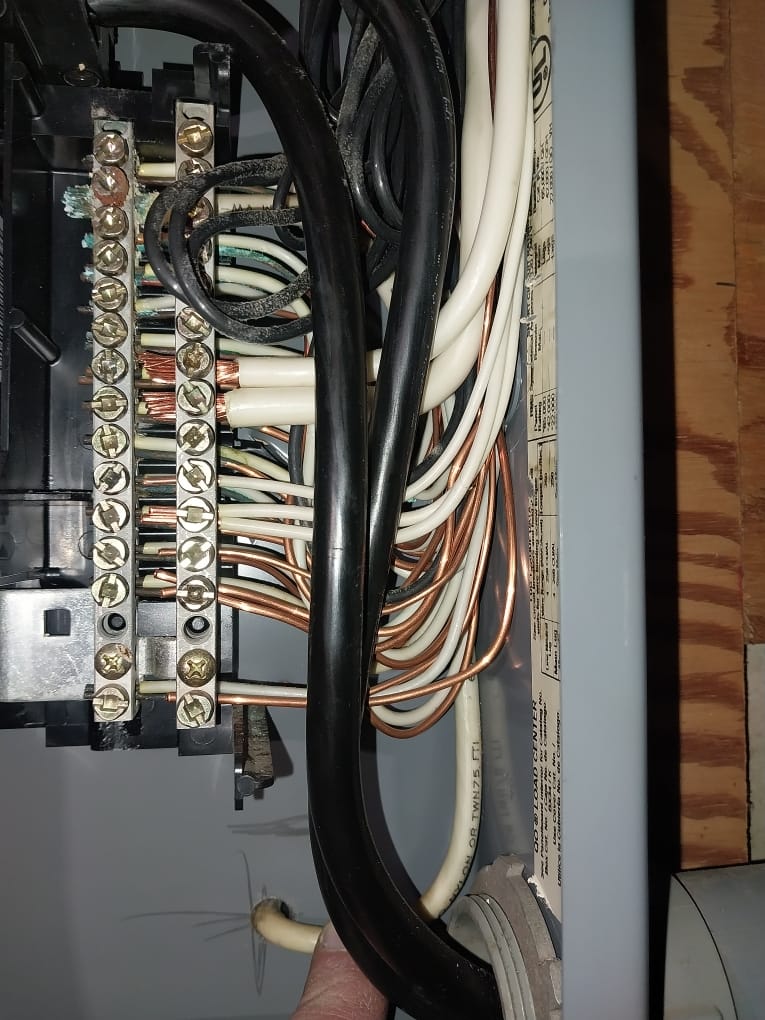
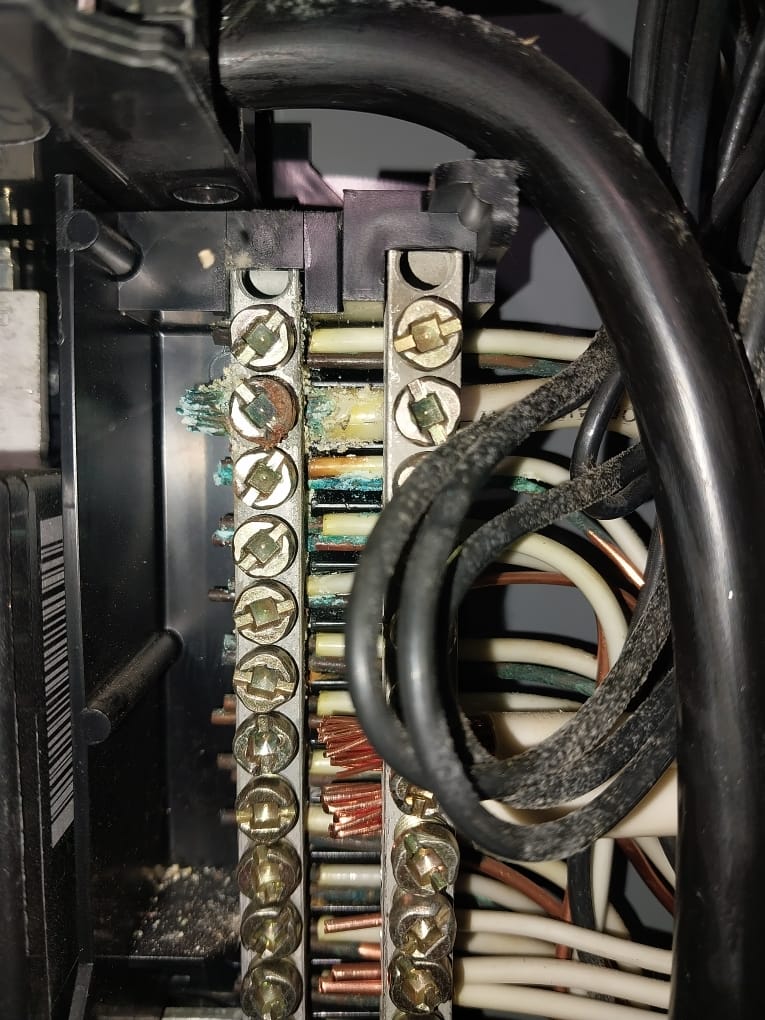
The grounding electrode conductor, originating from outside of the home, acted like a straw and conveyed water into the panel. The water also overcame the upward bend in the conductor as it entered the panel, because the exit point in the basement is still lower than the connection to the ground rod outside.
The entire premise of insulating a conductor in the first place has, as far as I can tell, two merits:
- Electrical insulation - we want current going in one way, coming out the other. Nothing touching it in-between should create an alternate path for current. This is desirable on ungrounded and grounded conductors. In the case of grounding electrode conductors, and equipment grounding conductors, this is, if anything, a hindrance. The conductor leads straight to a grounding electrode, a (copper-clad) steel rod that is in contact with the earth for at least 8 feet (250.53(G)). Having the grounding electrode conductor touch the ground, the foundation, and any other grounded part, is a plus! Insulation does nothing for us here.
- Protection of the conductor against corrosion and physical damage - while insulation can help a conductor against sun and mild abrasion, it is positively not going to help it when the weed-whacker comes around. The NEC already acknowledges this in 250.64(B), where it demands that exposed grounding electrode conductors are protected by conduit or cable armor, if they are exposed to physical damage.
I find it easy to make an argument that you are better of with a bare conductor in any case, unless you can find one cheaper than the other and the $3 on the entire service makes a difference to you.
Please share if you have seen this happen before and what your preference is, and why. If there are things here you did not understand and want to, please consider signing up for an account on the Learning Platform at the top (separate from the Blog Login).
Thank you and be safe!